


Fake weddings, bhajan clubbing, and paid run clubs are the new normal for Gujarat’s Gen Z — and the industry behind them has already crossed ₹12,000 crore
Vaidehi Somaiya, Ahmedabad
On a Sunday morning in Ahmedabad, twenty strangers meet up outside a cafe, lace up their shoes and pay for experience – running together! During peak wedding season, strangers are buying tickets to a wedding without a groom or a bride — just sangeet, mehendi, dhol and dancing. Neither of the events existed five years ago, but today are part of the industry that the government estimates is worth over ₹12,000 crore.
A generation ago, all these events were either attended due to an obligation or were forced down the throat by enthusiastic parents. Friendships were built in neighbourhoods, colleges and even workplaces. And socialising happened naturally, sans tickets, registrations or curated events.
Today, young Gujaratis are paying to attend fake weddings, bhajan clubbing nights, run clubs, dating mixers, storytelling circles and networking dinners.
The gathering remains the same, however the social connection has become a product of sale.
This is the ‘experience economy’ — a concept first articulated in 1998 by economists B. Joseph Pine II and James H. Gilmore, who argued that economies evolve through four stages: commodities, goods, services and experiences. In their framework, consumers increasingly pay not for a product or service itself, but for the memory, emotion and personal transformation associated with it.
A cup of coffee illustrates the progression. Coffee beans are commodities. Packaged coffee is a product. A café serving coffee offers a service. But a themed café hosting live music, conversations and community gatherings sells an experience.
That shift is now becoming visible across Gujarat.From Ahmedabad’s rapidly growing run clubs and café-based DJ nights to fake sangeets, spiritual gatherings, phone-free weekends and themed birthday and Garba events, a new economy is emerging around participation, community and belonging.
And unlike traditional entertainment, where audiences simply watched, the new experience economy demands involvement. People no longer want to be spectators. They want to be participants.
Beyond concerts and cinema
India always had entertainment. Movies, concerts, theatre and festivals have existed for decades. Gujarat is home to one of world’s largest recurring cultural spectacles — Navratri.
But the generation today is no longer waiting for this festival to socialise. They are now actively partaking in smaller, niche and community-driven experiences.
Supper clubs bring strangers together over curated meals. Run clubs combine fitness with social networking. Storytelling sessions transform cafés into performance spaces. Dating mixers replace dating apps, making it a safe form of communication. Bhajan clubbing, packages spirituality into an immersive social event.
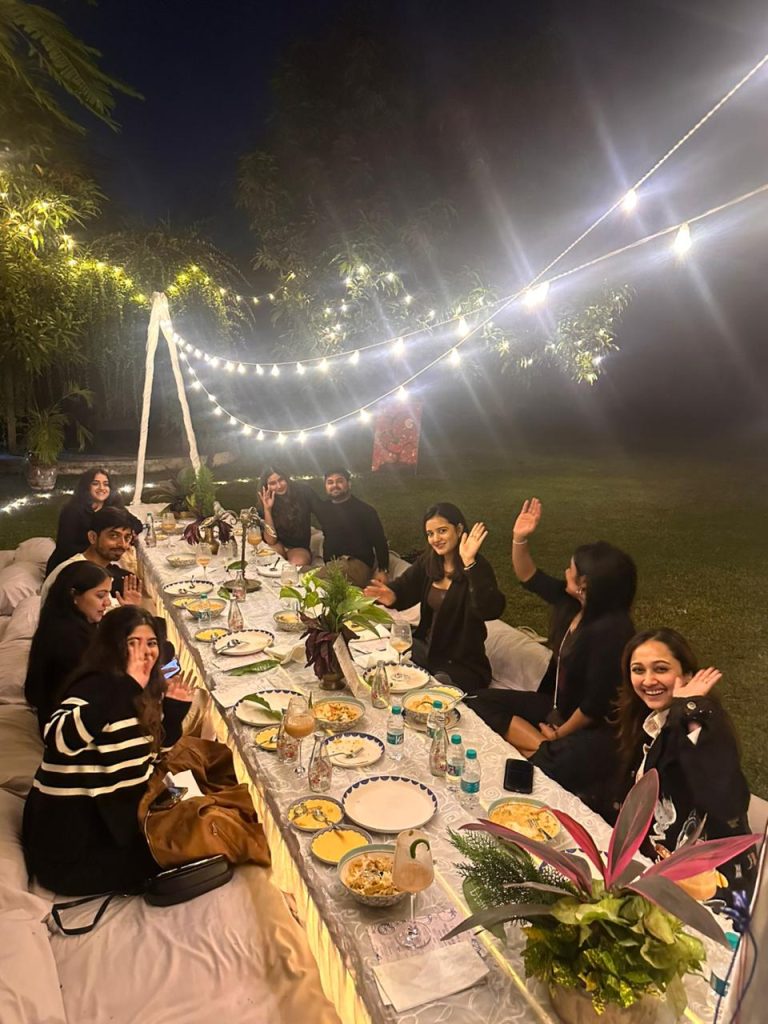
Wondering what the catch is? It is an opportunity to meet people.
“The biggest objective of events today is socialising,” says Neerav Jaiswal, founder of MePass, an experiential-events platform. According to Jaiswal, post-pandemic consumer behaviour has accelerated the shift towards offline interaction.
“Digital socialisation is a passé !. People want to meet in person. Events have become the new normal where trust is built,” he says.
His observation reflects a broader global trend. As social media platforms become increasingly crowded and transactional, consumers are seeking spaces where they can form meaningful relationships in person. Experiences, therefore, are no longer just entertainment. They are infrastructure for community building.
India’s experience boom
The timing is hardly accidental. India’s live experiences industry is expanding at an unprecedented pace.
According to the FICCI-EY Media and Entertainment Report 2026, the organised live-events segment grew by 44 percent in 2025, making it one of the fastest-growing components of the country’s media and entertainment economy. The report attributes the growth to ticketed concerts, religious gatherings, government events and personal celebrations.
_____________________________________________________________________________________________________
Separate research by EY-Parthenon and BookMyShow estimates that India’s live entertainment industry crossed ₹12,000 crore in 2024 and could continue growing at nearly 19 percent annually over the next few years.
____________________________________________________________________________________________________
The sector has become significant enough for the Ministry of Information and Broadcasting to release India’s first white paper on the live events economy in 2025, describing live experiences as a strategic cultural and economic asset. The rise of the so-called “concert economy” has already demonstrated the sector’s economic potential.
When British band Coldplay performed two shows in Ahmedabad in early 2025, the concerts generated an estimated economic impact of ₹641 crore through tourism, hospitality, transport, retail and allied services. More than a concert, it became a case study in how experiences can function as economic multipliers.
Gujarat’s social turn
Yet the most interesting developments may be happening far away from stadium concerts.
According to Jaiswal, Gujarat’s experience economy is increasingly being shaped by community-led formats that barely existed a few years ago.
Before 2022, organised house parties and curated café events were virtually absent from the state’s entertainment landscape. Today, he estimates Ahmedabad alone hosts dozens of such gatherings every month, while Gujarat collectively sees hundreds of small-scale experiential events.
The growth is particularly visible among younger audiences. For consumers between 18 and 25 years old, experiences are becoming a primary source of social discovery. House parties, techno gatherings, singles mixers and networking events often serve the same purpose that neighbourhoods, colleges and community spaces once fulfilled.
The shift is not merely cultural. It is also financial. Jaiswal estimates that the average ticket price for premium experiences has nearly tripled since 2019. What was once considered an expensive ₹500 event ticket is now routinely priced at ₹1,500 or more. Consumers, particularly Gen Z, appear increasingly willing to spend on memories rather than possessions.
The rise of the ‘Concept Economy’
Perhaps the strongest indication of where the industry is heading lies in the success of concept-driven events.
For much of the past decade, India’s live-events industry revolved around artists. Consumers bought tickets because of who was performing. Today, concepts themselves are becoming attractions.
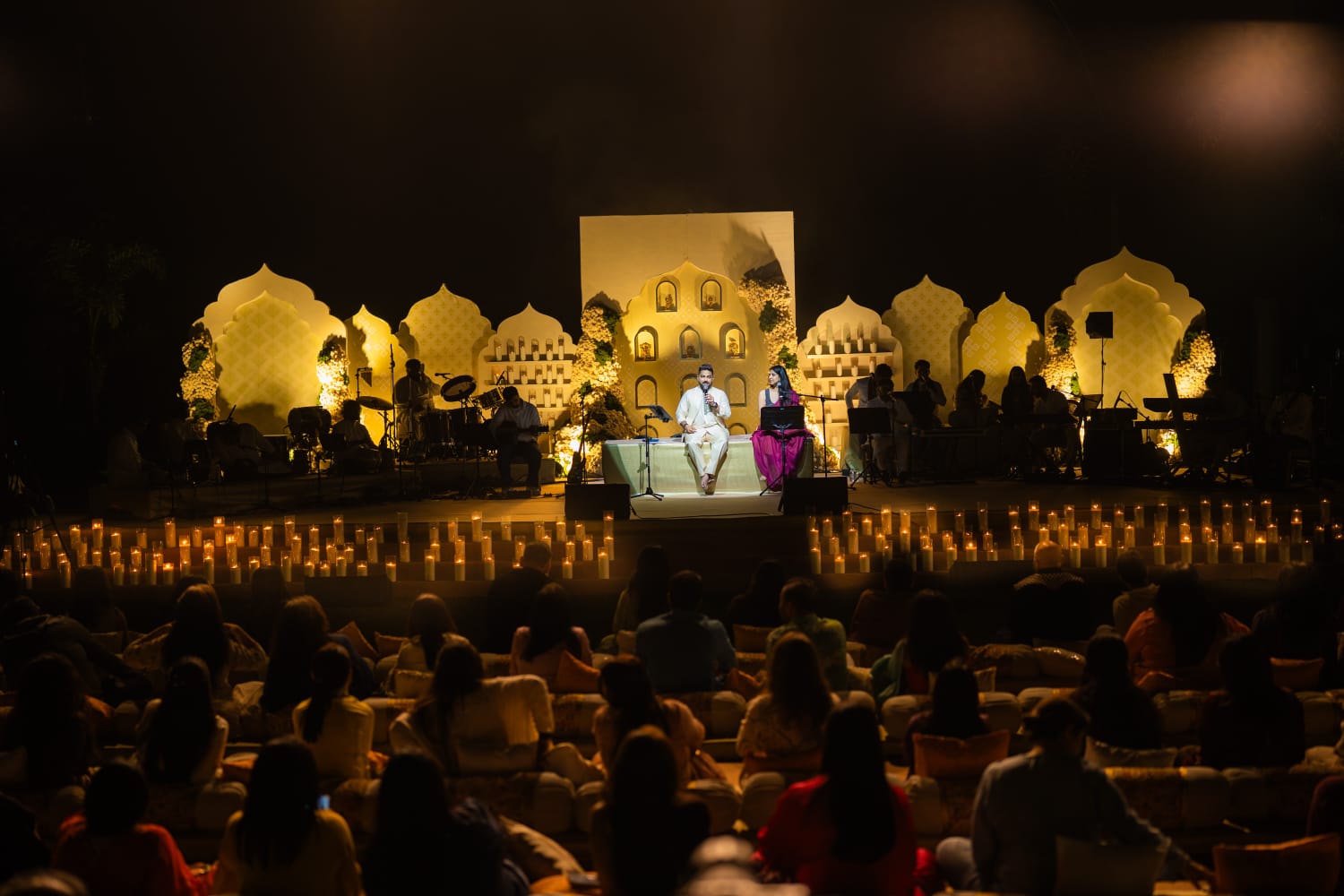
Fake weddings, fake sangeets and bhajan clubbing sessions have emerged as some of the most talked-about formats in urban India. Their success reflects a subtle but important shift. People are no longer paying solely to see an artist. They are paying to experience an idea.
__________________________________________________________________________________
“If someone had told us 10 ten years ago that people would pay to attend a wedding where there is no bride or groom, nobody would have believed it”, says Jaiswal.
__________________________________________________________________________________
Yet fake wedding events now routinely attract paying audiences. The same applies to bhajan clubbing. A form of devotional music once associated with family gatherings has been reinvented as a ticketed social experience for young urban audiences.
Imagine jamming to Lord Krishna’s bhajan over the weekend rather than driving through the city indulging in café hopping! Please add an organiser’s quote – bhajan clubbing with figures and experience.
These events suggest that the next stage of growth may be driven less by celebrity performers and more by imaginative concepts capable of creating unique social environments.
Tapping the gap or space of zero social environment, Saloni Shah founded Kaunversations …Speak to Saloni Shah of Kaunversations who started the group for the very purpose of bringing people together.
Navratri’s reinvention
Even Gujarat’s most established cultural institution is adapting.
Navratri remains the state’s largest experiential economy by scale, with hundreds of commercial Garba events taking place across Ahmedabad alone. But organisers are increasingly experimenting with exclusivity.
Theme-based Garbas, limited-duration events and curated experiences are replacing the traditional nine-night format. According to industry participants, shorter and more exclusive events often command higher ticket prices because scarcity creates demand. The trend reflects a broader principle shaping the experience economy: consumers are paying for access, uniqueness and identity as much as for entertainment itself.
Selling belonging
For all its economic significance, the experience economy is ultimately a story about human behaviour.
The products being sold are not concerts, workshops or dinners –they are belonging, connection and participation.
A run club offers exercise, but also friendships over fitness.
A supper club offers food, but also conversations beyond home-cooked meals.
A networking event offers professional opportunities, but also a community that promotes growth.
In a world increasingly mediated by screens, these experiences promise something that algorithms struggle to provide: genuine human interaction. That may explain why people are willing to pay for experiences they once received for free.
Gujarat has always boasted of strong bonds built over social gatherings. But what is changing now, is the way these gatherings are being organised, packaged and monetised. From fake weddings and bhajan clubbing to run clubs and storytelling circles to phone-free weekends, the state’s emerging experience economy is transforming community into a market.
If current trends continue, the future of entertainment may not belong to the biggest artist on a stage. It may belong to whoever creates the most compelling reason for strangers to gather in a room.