



A century-old fruit, a 30-day export window, and two states racing to trademark the same name — inside India’s most fragrant turf war.
Vaidehi Somaiya, Ahmedabad
Every year, as summer settles over the western coast of India, a familiar fragrance fills the markets of Maharashtra and Gujarat. It’s a sign of the arrival of Alphonso — the king of fruits.. However, recently, this seasonal joy has been accompanied by a complex conversation about brand equity and regional heritage. From the Konkan coast of Maharashtra to the southern orchards of Gujarat, a case is being made at the Geographical Indications (GI) Registry. This dialogue, centered on the prestigious ‘Hapus’ label, offers a look at how origin-based branding is becoming a critical economic driver in a globalised market.


For growers in the Konkan districts of Ratnagiri and Devgad, the 2025-2026 season has been marked by a new sense of competition. In 2018, Maharashtra’s Konkan belt secured a GI tag for Alphonso, effectively trademarking the name for its specific geography. This protection is vital because export-grade Alphonso mangoes can command a price premium of 100% to 160% over non-certified versions in international markets.
The status quo was recently challenged when the Bharatiya Kisan Sangh (BKS) filed an application for the ‘Valsad Hapus’ GI tag. While Maharashtra’s farmers argue that their unique red laterite soil creates a non-fibrous texture that is difficult to replicate, Gujarat’s farmers highlight a 150-year history of cultivation along the Saurashtra-Konkan belt.
The Indian mango market alone reached a value of USD 2.9 billion (₹290 crore) in 2025, and GI-certified premium varieties are the primary drivers of this growth. Therefore, the farmers’ fear of losing their market share is a rational one. From a business perspective, the conflict is about market sequencing and transparency. The Ratnagiri harvest typically ends by mid-May, precisely when the Valsad Hapus begins to peak. Gujarat’s advocates argue that a separate tag would prevent their produce from being rebranded by middlemen, ensuring that the financial benefits of the late-season harvest flow directly to the 87 villages in the Navsari and Valsad districts.
But why does a GI tag matter so much to the farmers?
A GI tag is an intellectual property right under the Geographical Indication of the Goods (Registration and Protection) Act, 1999, which identifies a product as originating from a specific territory. Economically, it functions as a signaling device that helps producers differentiate their goods from mass-produced imitations. It also enables the producers to potentially charge a premium price for a quality assured product. This is the driving force behind the Hapus battle.
How GI Tags Help Businesses
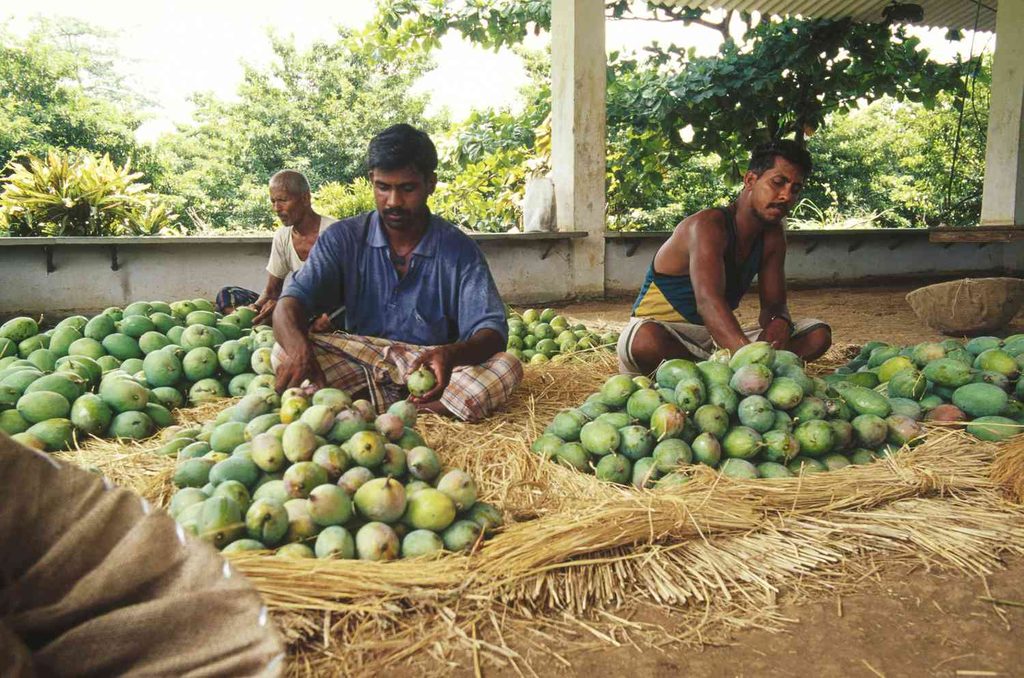
For farmers and artisans, a GI tag is a powerful financial lifeline. Unlike a private trademark, a GI tag belongs to the entire community of producers. This allows small and medium enterprises (SMEs) to pool resources for marketing and logistics. The tag acts as a credibility marker for international buyers in Europe and North America, who actively seek out GI status to guarantee provenance, for which consumers are often willing to pay a premium. Research indicates that GI-certified goods typically achieve export prices 20% to 40% higher than non-certified alternatives. In rural artisan clusters, GI registration can translate to a 20% to 30% increase in income for weavers and craftspeople.
The Registry classifies products into five main categories:
Agricultural Goods: Grains, fruits, and spices (e.g., Gir Kesar Mango, Bhalia Wheat).
Handicrafts: Skill-based traditional crafts (e.g., Kutch Embroidery, Patan Patola).
Food Stuffs: Processed or traditional food items (e.g., Amalsad Chikoo).
Manufactured Goods: Industrial products with regional craftsmanship (e.g., Surat Zari Craft).
Natural Goods: Unique materials or stones (e.g., Ambaji White Marble).
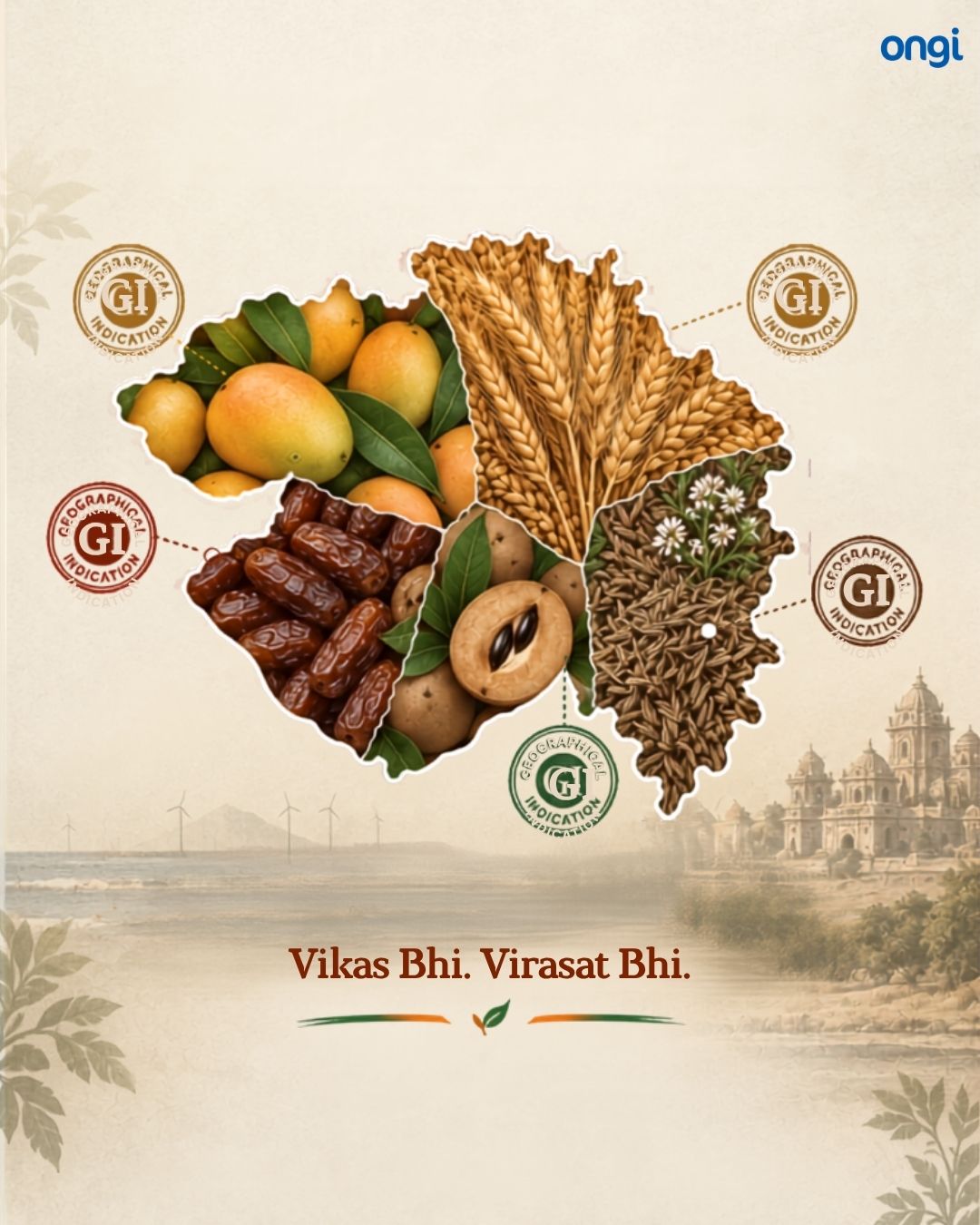
As of early 2026, Gujarat has secured 28 GI tags. These certifications are transforming traditional crops into high-value global commodities. The state’s GI portfolio is heavily dominated by handicrafts (23 tags) along with several agricultural products, including Amalsad Chikoo (28th tag), Kutchi Kharek, and Gir Kesar Mango.
While on the topic of mangoes in Gujarat, one cannot help but mention the famous ‘Gir Kesar’. Awarded its GI tag in 2011, it has seen massive commercial expansion. By 2025, the cultivation area for Kesar had grown to over 44,000 hectares, with production reaching 3.15 lakh metric tonnes. In the 2023-24 fiscal year alone, Gujarat shipped 689.5 metric tons of Kesar, earning USD 2.04 million (₹ 204 crore) in revenue. The GI tag has underpinned a 38% surge in international requests for Kesar in 2025, driven by its longer shelf life and consistent sweetness levels of 18 to 22 °Brix (a unit measure for the sugar content in fruit, vegetables, and beverages).
Gujarat’s aggressive move for GI tags
While this mango may have already peaked in the global market, the Amalsad Chikoo (sapodilla) is on a rising curve of exports. Granted a GI tag in March 2025, it represents a significant horticultural victory. Navsari is the largest producer of chikoos in the country, and Gujarat alone accounts for 98% of India’s chikoo exports. Cultivated across 51 villages in Gandevi Taluka, six in Jalalpore, and 30 in Navsari, this GI area covers 87 villages that collectively produce 30% of the state’s yield. This tag is expected to significantly boost global market access in Bahrain, the UK, and the UAE by protecting the fruit’s reputation for unmatched sweetness and long shelf life. Strong demand exists in Gulf countries (especially UAE), while markets like the UK represent emerging export opportunities rather than large established demand hubs according to the National Horticulture Board.
Bhalia wheat, grown without artificial irrigation across two lakh hectares, received its GI tag in 2011. This recognition was a catalyst for export growth; in 2020-21, total Indian wheat exports witnessed a staggering 808% growth to Rs 4,034 crore. Bhalia’s high protein and gluten content have made it a preferred choice for the global semolina and pasta industries, leading to major shipments to Kenya and Sri Lanka.
The government has set a target of reaching 10,000 GI-tagged products across India by 2030, under the vision of ‘Vikas Bhi, Virasat Bhi’ (development as well as heritage). For Gujarat, this means identifying new potential GIs like Surti Papdi and Surat Ghari. While registration is a major milestone, success depends on robust quality control.
The story of GI tags in Gujarat is a story of economic resilience, like the Kesar mango, earning millions in the US market, while the Bhalia wheat grain feeds new nations, and the Patan weavers create textiles that cost as much as a car. These tags provide a legal framework that allows regional history to be converted into recognised, premium-value economic output. By protecting these geographical indications, Gujarat is ensuring that the people who tend its land and preserve its crafts can compete and thrive on the global stage for generations to come.
GI tags are not merely a title or a category – they honour the heritage of the land the product hails from, it gives a platform to the farmers, artisans, and families that have strived to keep the heritage alive and pass it on to generation after generation. They safeguard the stories of lands whose produce continues to live and inspire generations.