


NDAs, deepfaked blessings from deceased relatives, and half-a-trillion-dollar ambitions… Take a look at trends reshaping Gujarat’s luxury weddings
Vaidehi Somaiya, Ahmedabad
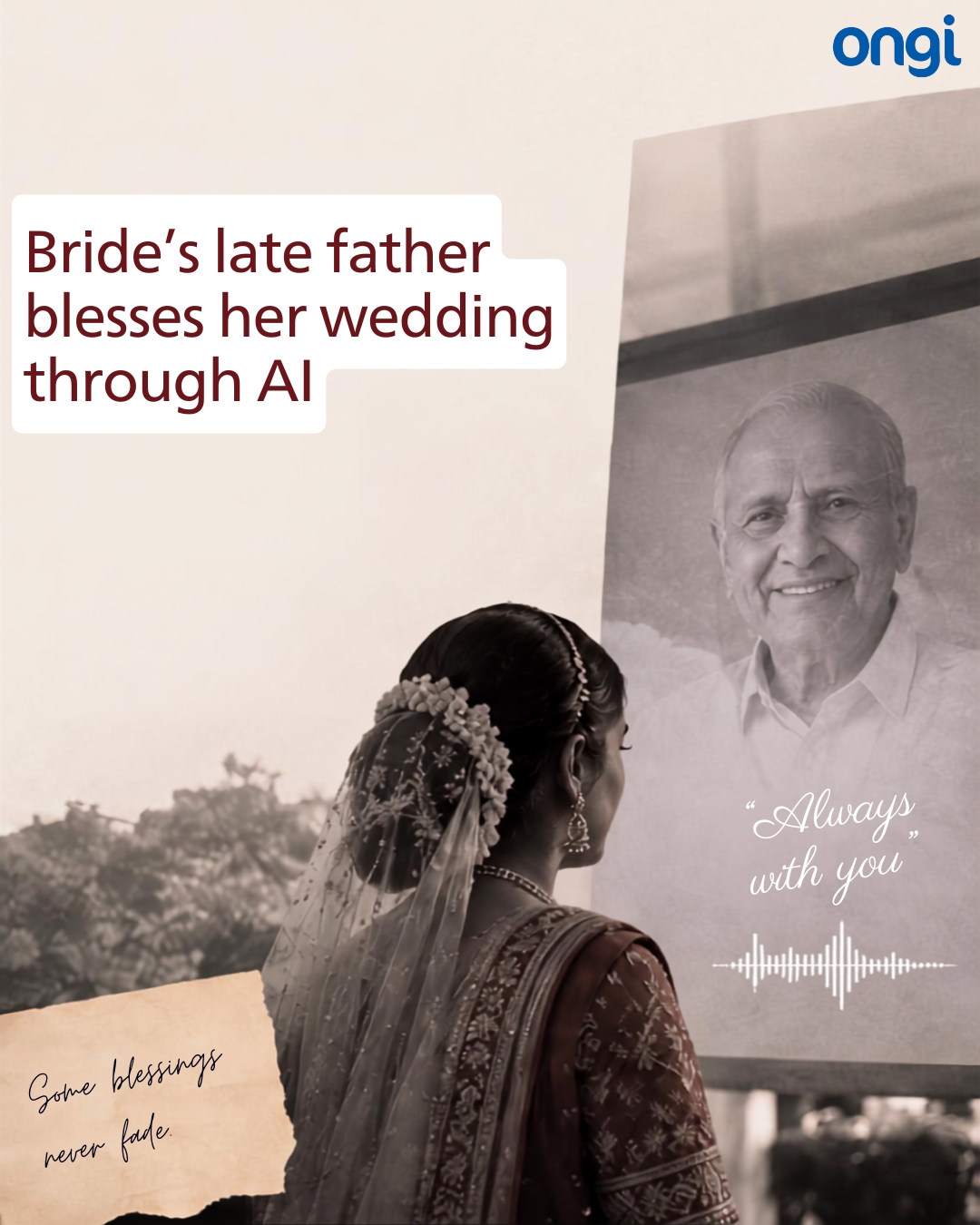
A father, who passed away three years ago, ‘attends’ his daughter’s wedding. His voice, cloned by AI, even offers blessings during the ‘pheras’. Sounds like a scene from a sci-fi film? But it’s not. In Gujarat’s luxury wedding circuit, this is a reality. It is one of the several trends redefining what half-a-trillion-dollar industry looks like.
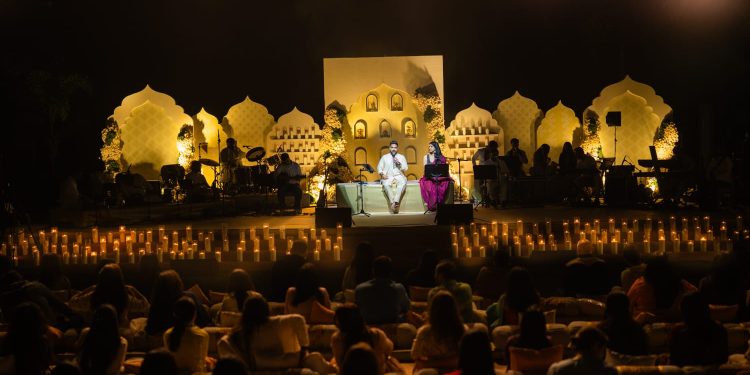
For the longest time, big fat Indian weddings meant family, food, pheras and tears of joy. All the memories were built around rituals. And even as that remains constant, everything built around it has changed. You now have couture, curated culinary experiences, pre-wedding sports tournaments, cinematic shoots and afterparties that stretch the celebrations across weeks, not days.
The evolution of India’s wedding market
The contemporary luxury wedding has evolved into a sophisticated, multi-trillion dollar service sector that blends traditional rituals with cutting-edge technology and high-fashion editorial aesthetics. This change is not merely a preferential one, rather a reflection of broader socio-economic shifts, including the professionalisation of wedding services.
The Indian wedding market is valued at $139.33 billion (र 13,933 crore) in 2026, with a clear pivot toward the ultra-luxury segment, and is projected to reach US$ 502.56 billion (र 50,256 crore) by 2035, according to the ‘India Wedding Services Market 2026–2035’ report by Customer Market Insights.
The Indian wedding industry is characterised by the sheer scale and volume of the events. According to a report, ‘Examining the Economic Impact of India’s Wedding Industry’ by India’s Brand Equity Foundation (IBEF), the Indian wedding industry boasts of 5-10 million full-time jobs across various sectors, ranging from artisans to technical integration. During a single 23-day period in late 2023, approximately 3.5 million (35 lakhs) weddings generated an economic upturn of roughly US$ 57.2 billion (र 5,720 crore), according to the Confederation of All India Traders (CAIT). This economy accounts for 3% of the total GDP of our country.
This and various other independent study reports by financial analysts like the IMARC group, Spherical insights and Techsci research are in consensus that the market is entering a rapid formalisation, transitioning from a US$ 130 billion (र 13,000 crore) ecosystem to a more organised, tech-driven (wed-tech) industry with professional designers and consultants for speciality tasks. It is no longer just a ritualistic function, it has become more about curating experiences that the guests would remember the family and bride and groom by. Often, people get inspired for their own wedding after attending such curated weddings, in turn fueling the economy.
Gujarat is emerging as a critical laboratory for new trends. From AI-driven guest management to the strategic use of Non-Disclosure Agreements (NDAs), the industry is shifting from performative excess to micro-luxury and curated privacy.
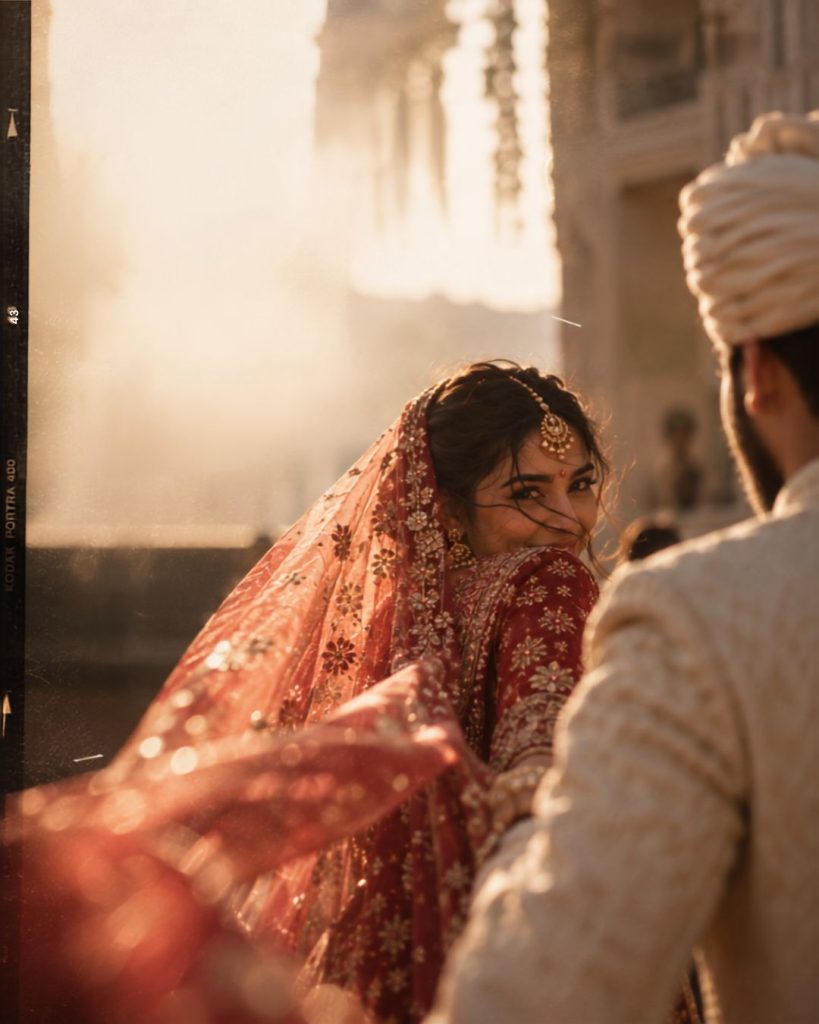
“Weddings have always been a festival in India. For every 150 kms you travel, the customs, the rituals, and the roles of the family members change but the sentiment remains the same through geographies and cultures,” says Varun Gajjar of XL Experiences. What has changed is how people deal with their guest lists, which are shrinking. At the same time, the number of events leading up to the wedding are increasing. “Overall, the number of guests are more but instead of putting them all in a single big formal event, families now prefer multiple curated evenings/events to be able to cater to different groups and keep the spirit of the event alive,” says Gajjjar .
Weddings in Gujarat
Gujarat has experienced a notable surge in marriage registrations, which rose from 1,58,605 in 2014 to 3,40,357 in 2023. This volume provides a recession-resistant baseline for service providers. While the luxury segment continues to expand, driven by state’s affluent industrial families and global diaspora, the upper middle class segment, with their increased buying capacity as newly found access in the market, opens up new avenues for vendors involved.
While Rajasthan, Goa and Kerala have long been the gold standard for destination weddings in India, Gujarat is aggressively positioning itself to capture a larger share of this US$ 3.5 billion (र 350 crore) segment. Currently, one in four Indian weddings is a destination event, a segment valued at र 2.5 lakh crore and growing at 35% annually.
Internationally, Maldives, Thailand, Phuket, Bali and Vietnam have long been the default destinations for Indian weddings abroad. However, Gujarati wedding planners now predict a shift towards Europe—unexplored landscapes, whose natural backdrops align with the emerging trend of designing around existing natural spaces.
The ‘Wed in Gujarat’ campaign
In the February 2026-27 Budget, the Gujarat government presented a record र 4.08 lakh crore fiscal plan that declared 2026 as ‘Gujarat Tourism Year.’ A centerpiece of this budget is the ‘Wed in Gujarat’ campaign, a strategic initiative designed to attract high-spend visitors and marquee weddings. The campaign promotes sites like the Statue of Unity, White Rann of Kutch, Heritage temples like Somnath and Ambaji and more. Aditi Anadkat of Aarkhe Events adds, “Within the state, families tend to turn towards Sasan Gir for the forest backdrop and the availability of resorts, as it is the last habitat of Asiatic lions, providing guests a unique experience to carry back home. Diu, on the other hand, is often preferred for its beaches and no prohibition on alcohol.” But Rajasthan continues to remain the top choice among families for its unparalleled hospitality and vendor network.
Wedding designer to the rescue
With this change in the approach to planning a wedding, there is a demand for hiring experts from different fields, and that has become more and more accessible for anyone who seeks it. While wardrobe designers existed, space designers and culinary curators are some of the major emerging professions from the ancillary industry. A major shift is in how people address these associated services. They prefer to hire wedding designers instead of event planners, wedding planners, decorators or production houses.
What do wedding designers do exactly? They curate and design your wedding like an experience that is an extension of your personality, reflecting your family or story or even your ideology, and if they are given full artistic freedom, they design one of a kind experience reflecting your taste and extravagance.
Go big or go home
As the guest lists shrink, the number of events leading up to the wedding keeps growing. There are pre-wedding functions starting from a week or 10 days prior to the wedding, and there are also strategically planned and paced events happening six months before the wedding.
Why plan a pre-wedding function six months in advance? Because weddings have now become more experiential; it is about breaking the ice between the guests; it is about accommodating different groups and paying attention to them all; it is about spending time with the ones who are equally excited for your wedding; and it is about this larger-than-life celebration of one of the major life events of an Indian family.
On average, a family spends approximately 20% of their total lifetime earnings on a single child’s wedding. In the luxury segment, the allocation of these funds has shifted away from purely traditional assets towards more experiential services.
AI, Deepfakes, and the New Rules of Privacy
We couldn’t resist asking wedding planners the obvious AI question—and they agreed it’s now a necessity. Many clients have moved past simple face-recognition photo tagging into automatic collage and reel generation. Designers frame AI as a skill upgrade, not a replacement: automating tasks, managing calendars, personalising and scheduling reminders. It’s the synergy of human judgement and technological tools that will define the next few years.
One of the biggest stressors in an Indian wedding is managing the guest list. New platforms are tackling this through WhatsApp-based conversational assistants. ‘Nayna AI’, by Envito AI, acts as a central intelligence layer for guest experience—fielding questions on travel, outfits, event schedules, RSVPs, and room allocation. Other AI tools now automate duplicate detection in guest lists, coordinate pickup and drop-off timings, and map seating charts, freeing up man-hours for hosting duties and crisis management instead.
A more striking trend is using AI to recreate a presence at the wedding of loved ones who have
passed away. Reserved seats for deceased family members are already common; this goes a step further—deepfake video and voice cloning recreate a parent’s or grandparent’s presence so the family can feel them there for the culturally significant moment of ‘blessings of the elders.’
“It might be a long time before we see any robots replacing the planners though,” jokes Saagar, founder of Kankoo Thaapa.
Pointing to other quirky trends, Saagar leads us to NDAs. He says, “As luxury weddings become more media-heavy, the desire for privacy and narrative control has intensified. High-profile and political families are increasingly using Non-Disclosure Agreements as a standard legal tool.”
These agreements protect more than the couple’s privacy—they’re a strategic tool for controlling how the wedding reaches social media. Vendors who sign NDAs are barred from posting behind-the-scenes content until the couple’s chosen media team releases the official narrative. Increasingly, the wedding is managed less like a family celebration and more like a personal brand launch.
It’s the bride and groom’s decision
A critical trend observed in the luxury wedding market is the polarisation of client aspirations. Industry experts note a distinct divide between clients seeking “viral fame” and those prioritising an “intimate, detail-driven luxury.” For the former, the wedding is a media event designed for maximum social media impact. For the latter, it is an experiential journey where the quality of the guests’ interaction with the space is paramount.
The reason behind this shift is the fact that the decision making is gradually shifting from the parents to the bride and groom. While it is a collective effort leading to the final decision, the couple is now steering the wheels of their own celebrations as opposed to the older practice when the parents called the shots.
This is a layered shift in how Indian families approach weddings. It is no longer about ‘ladkewalas’ and ‘ladkiwalas’, who is hosting the function, who is footing the bill. Now it is all about equal participation by both families. It is about inputs, sharing the load of decision making, sharing responsibilities, sharing roles, becoming a single family as they celebrate the bride and groom in their unison.
The rise of the ‘editorial’ narrative
The modern wedding is increasingly viewed through an editorial lens. This approach moves beyond simple colour themes towards a cohesive visual narrative that feels like a feature in a luxury fashion magazine. There are no decorators now, who provide flowers and fabrics; there are space designers, wedding designers who act as creative directors who manage every touchpoint, from Kankotri (traditional invitation) to Vidayi (departure). This synergy between various vendors is creating a more unified aesthetic, where the decor serves as a medium for storytelling rather than just a backdrop.
The wedding ceremony too—the pheras—is also reclaiming its status as the centerpiece of the event. Even if the pre-wedding celebration like the sangeet is elaborate, the actual marriage ritual is being designed with sculptural mandaps and intentional lighting to create a highlight moment. These mandaps have evolved into artistic statement pieces, featuring mixed textures, cascading crystals, and botanical installations designed specifically for a visual spectacle.
Even the rituals are no longer just mundane traditions followed by the bride and the groom. For instance, the haldi ceremony wastraditionally celebrated separately in the homes of the bride and the groom. It involved a lather of pure turmeric paste mixed with sandalwood, rose water and gram flour is applied on the bodies of the bride and groom as a blessing and to help them get a natural glow. This ceremony is now centered around flowers, games and workshops.
These pre-wedding events now have curated tables and corners that indulge audiences in games, childhood snacks and goodies, workshops involving lipstick and perfume-making and even tarot reading sessions.
Similarly, the grahshanti, which was traditionally held during the early morning hours, is increasingly being shifted to noon or afternoon slots, prioritising comfort over chaos, allowing guests to rest and enjoy a leisurely meal before the function begins.
‘Lagan nu jaman’ or wedding food too is backed by a concept and involves drama. Luxury catering is moving away from standard buffets towards regional and heritage-themed menus that incorporate live interactive counters and farm-to-table organic options. The menu is no longer just a list of dishes but a curated part of the event’s design language.
Cinematic storytelling – Wedding feature films
The documentation of weddings has undergone a technological and artistic revolution. The industry has transitioned from the documentarian approach of the early 2000s—which involved simply recording and documenting different ceremonies —to a digital era that emphasises storytelling and rapid content consumption.
Current trends for 2025 and 2026 suggest a conscious move away from perfect or overly curated Instagram photos towards raw, rustic, and emotionally-driven imagery. Modern couples are prioritising emotions over perfection, choosing images with motion blur, half-smiles, and candid interactions over stiff, traditional poses. This style, often called editorial storytelling, blends high-fashion aesthetics with unscripted, documentary-style moments.
Another interesting trend, as confirmed by wedding designer Dhvani Desai, is that of ‘sustainability and artistic renaissance’. She says, “The extravagance of luxury weddings is increasingly being balanced by a commitment to sustainability—a trend known as Eco-luxe. Today’s couples are prioritising meaningful and ethical celebrations over sheer scale. We have designed zero waste weddings and expect a lot more demand for them in the future.” She adds, “Sustainable and zero waste weddings help weave new industry vendors into the wedding industry and give a boost to the local sustainability businesses. Even local artisans are woven into the setups. Couples are prioritising unique, handcrafted elements that reflect regional heritage, particularly in Gujarat’s rich textile clusters.”
Adding to this information, Saagar from Kankoo Thaapa says he and his team go a step further with regional and local heritage. Not only do they promote local art and artisans in their designs, but they also educate and encourage their clients to promote local culture and heritage, thus helping the regional art community grow. “There is a high demand for involving local artisans to create live paintings or hand-painted decor during wedding functions currently.”
The luxury wedding industry in Gujarat is no longer just about feeling grandeur; it is about intentionality. The transition from massive, anonymous crowds of the past to curated, experiential gatherings of 2026, reflects a more globalised, tech-savvy consumer base. As AI handles the manual drudgery of logistics and cinematic storytelling preserves the raw emotion of the event, the focus has returned to the heart of the celebration—the rituals and the people.
For wedding professionals, the key to success in this evolving landscape lies in balancing the desire for ‘viral fame’ with the profound need for authentic, intimate connection. As the industry scales towards a half-trillion-dollar (₹ 50,000 crore) valuation by 2035, one question will define the next decade: will it be the planners who master viral spectacle or the ones who stay fixed on what clients truly want? What will ‘Wed in Gujarat’ look like?
Read about it in the next edition of our #WeddingWows series.