



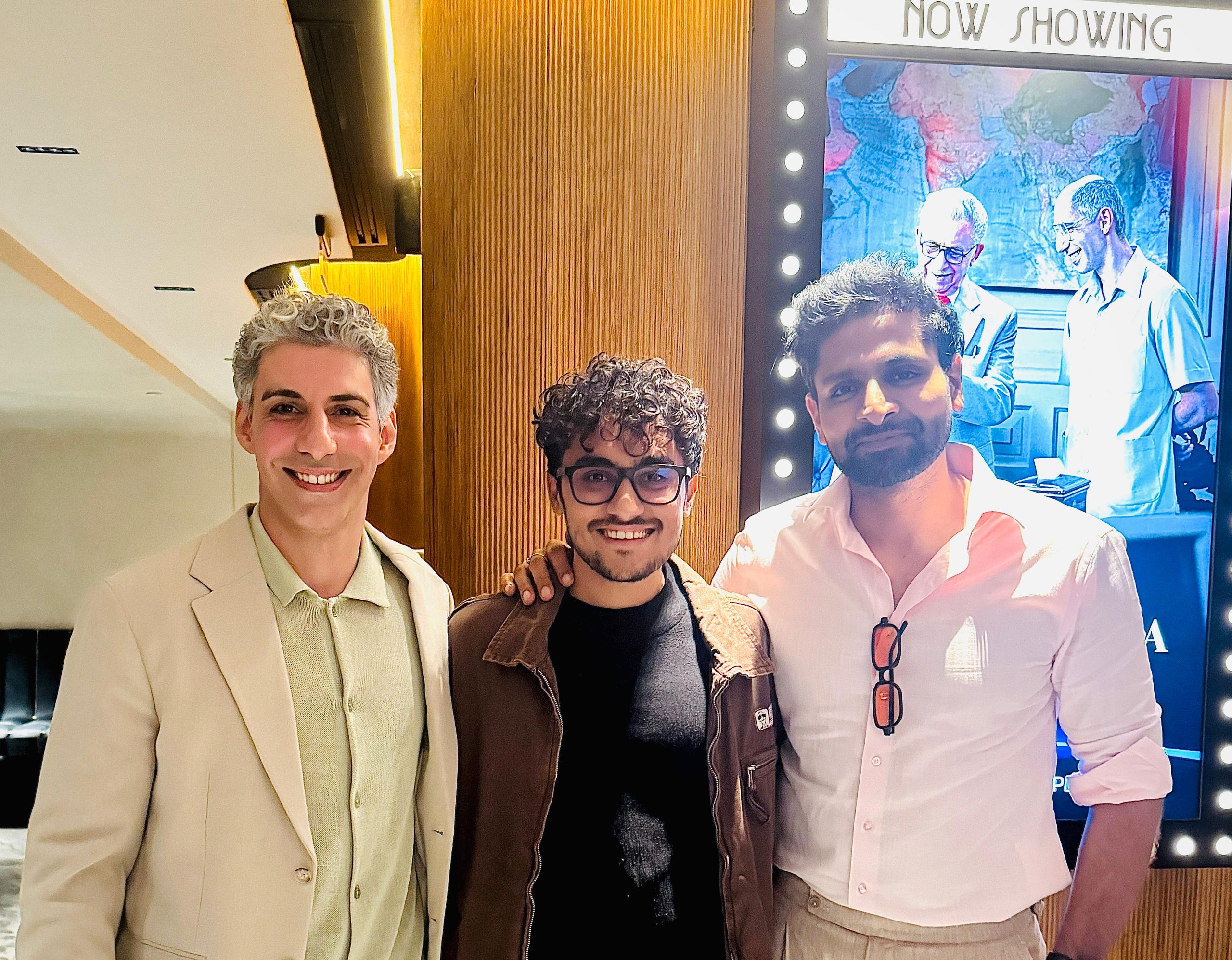
Karan Vyas, Kandarp Shroff and Niraj Dasa fought, flatmated, argued in Gujarati before penning it in six episodes in Hindi
Vaidehi Somaiya, Ahmedabad
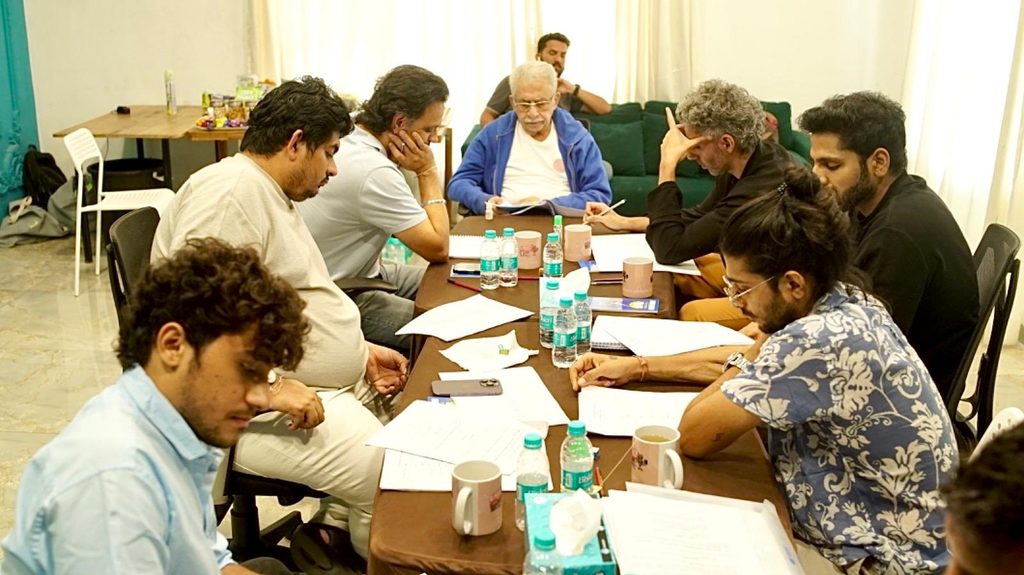
They argued in Gujarati. They brainstormed in Gujarati. The show they wrote — the six-episode ‘Made In India: The Titan Story’ — is entirely in Hindi.
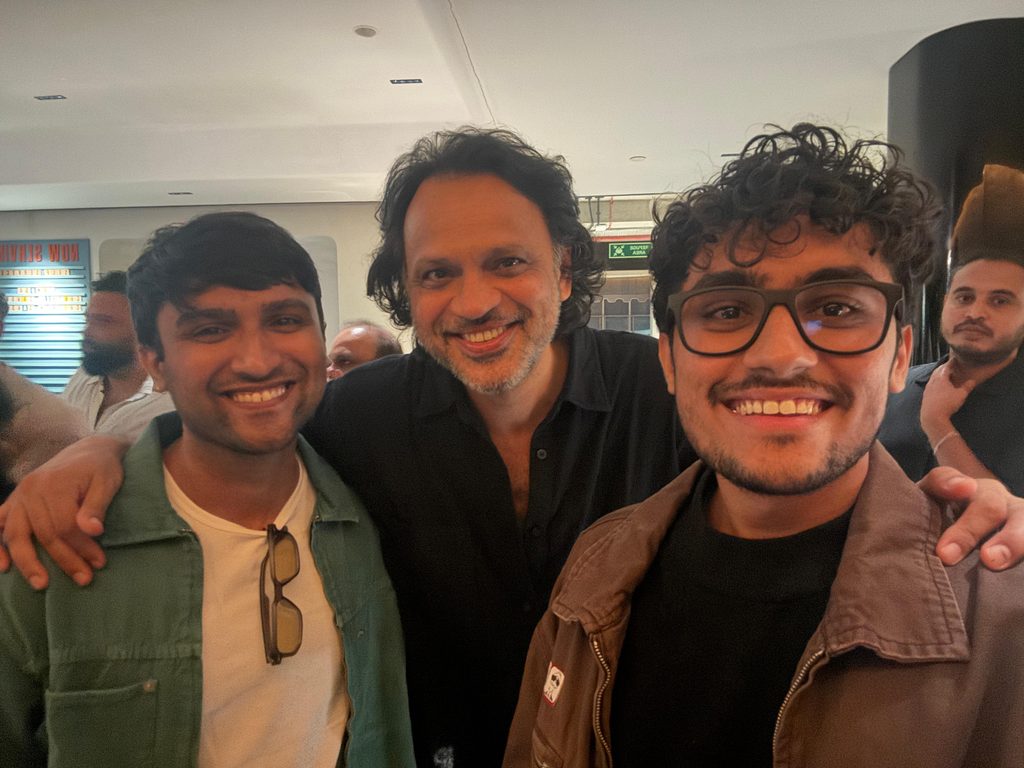
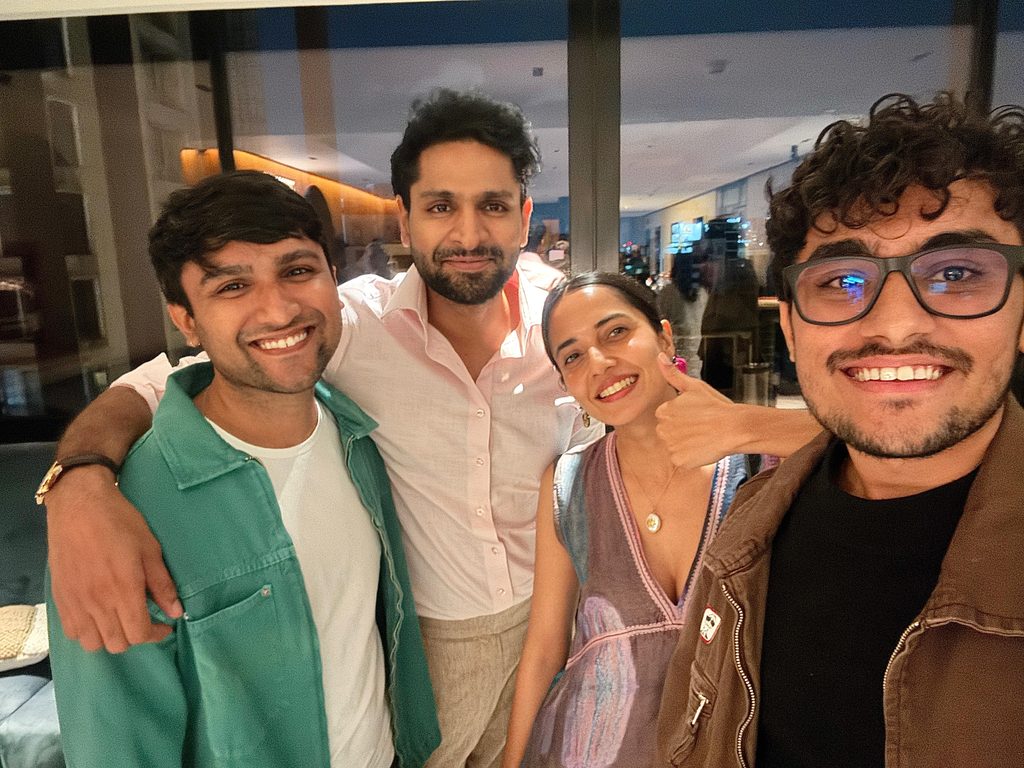
Karan Vyas, Kandarp Shroff and Niraj Dasa are the three Gujarati writers who turned four decades of Titan’s corporate history into a story about ordinary people who built it. Interestingly, none of them set out to write it together, but all three now call each other brothers.
Vyas, Shroff and Dasa came to the project from very different corners of storytelling. Vyas was already an experienced screenwriter, known for projects such as Scam 1992. Shroff had moved from engineering and theatre to film school, direction and acting. Dasa came from novel writing, where storytelling had begun as a private pleasure rather than a profession.
Yet when they entered the writers’ room for Titan, something unexpectedly Gujarati held them together. “It’s like a Gujarati writers’ room,” Vyas laughs, continuing to add, “Cinema mein kya karna hai, Gujarati mein hi baat hogi!”
For a show about the birth of an Indian institution, that brotherhood became an institution of its own.
Niraj Dasa: The novelist thinking and writing scenes
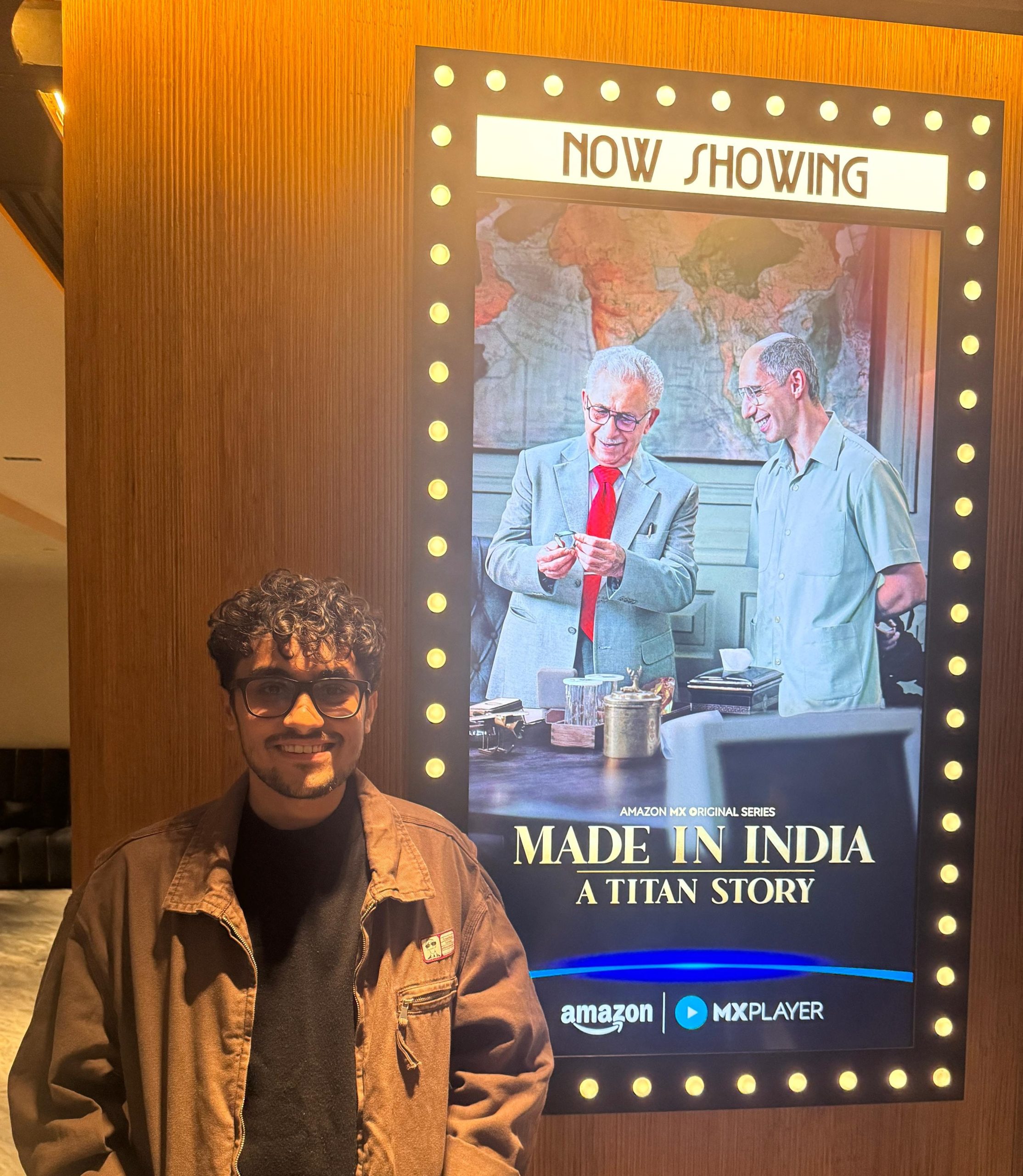
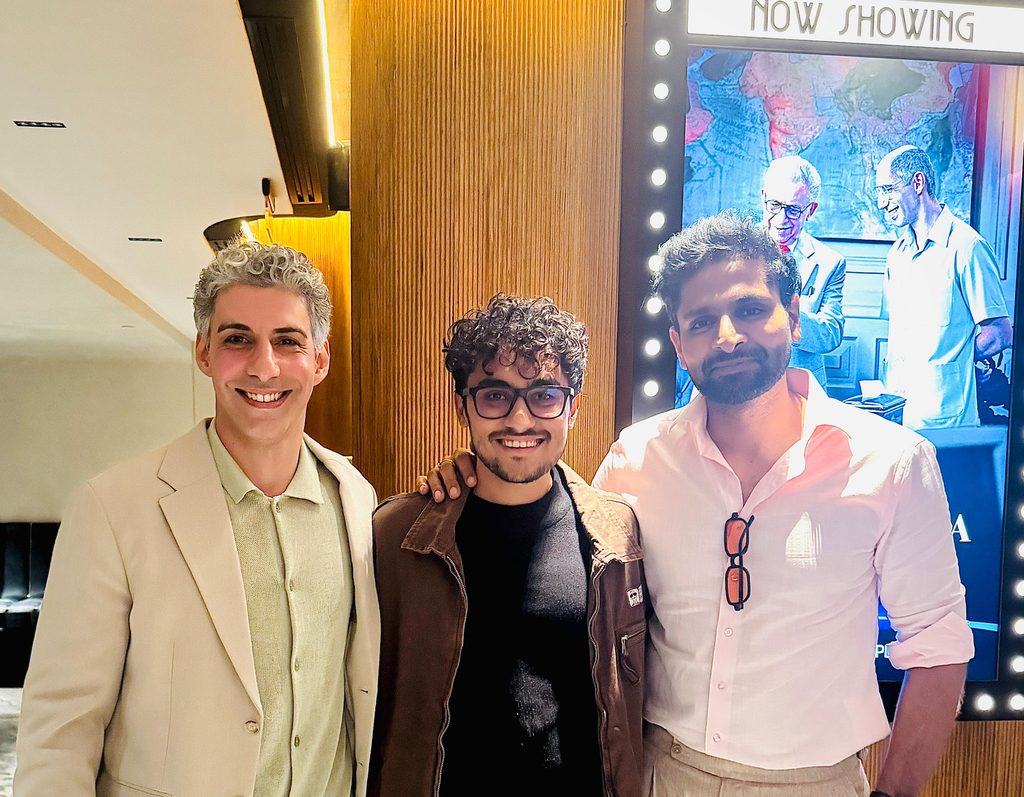
Niraj Dasa’s route to screenwriting began, almost accidentally, with novels — something he wrote for years simply because it made him happy, with his parents’ support and no pressure to turn it into a career.
Then came Covid, and a thought: a story was still a story, whether it appeared in a novel, film, play or web series. But the transition was harder than he expected.
A novelist can describe the colour of a door, the smell of a room, the jewellery a character is wearing, the weather and even the philosophical texture of a moment. A screenplay cannot afford that indulgence. The camera will eventually do much of the describing. “Novel writing and screenplay writing are like two worlds apart,” says Dasa, adding, ““Jameen aasman jetlo farak che (As different as night and day).”
That lesson of transition from novel to scene writing extended beyond collaboration. Titan also changed the way Dasa thought about his own relationship with writing.
One idea from the show stayed with him particularly strongly: the “freedom to fail.” He sees it as more than a philosophy inside Titan’s workplace culture. It became something he could apply to his own life and craft — the willingness to accept failure instead of running away from it.
Writing itself taught him a similar lesson.
When writing was a hobby, Dasa could wait for the mood to arrive. If he was not in the zone, he could postpone the work. As writing became a profession, that luxury disappeared. There were deadlines. There were days when the ideas did not come, when the work felt mechanical, when writing felt less like meditation and more like a job.
The difference, he discovered, was consistency.
He began writing even when he did not feel like writing. And somewhere along the way, the writer’s block that once arrived regularly began to lose its power.
“If you do something every single day,” he says, “you are bound to get better.” He was learning how to make it better.
Kandarp Shroff: theatre kid who imagines actors
Shroff’s particular strength was that he could never see a scene only as words on a page.
His theatre background meant that, while writing, he was already imagining actors, movement, rhythm and performance. He sometimes writes aloud, slipping between characters.
The writers had plenty of technical material. They also had a book by Vinay Kamath as their base. But a documentary-like chronology — this person was hired, then this happened, then that person arrived — was not enough. They needed people.
At the Titan factory, they discovered a culture that surprised them. Employees seemed genuinely excited to return to work after weekends. There was even a “freedom of failure” philosophy, including an award associated with failing and learning from it. This culture persuaded writers to explore the creators behind it.
That led them to the four emotional pillars of the show — Xerxes, Akash, Megha and Gaurav — and to the small details that could make corporate history feel intimate.
For instance the boardroom scenes. Technical discussions can be dramatically inert. So Shroff thought about what the characters could physically be doing while talking. In one sequence, apples become a demonstration tool. In another, a character’s quirk to explain an idea by acting it out his words is more persuasive than words.
While hunting for anecdotes, one recurring Titan joke the writers came across was that the company made watches and they ‘made matches’ too. They met couples whose relationships had begun in the company. That real-world detail became the seed for Gaurav and Megha’s relationship arc in the series.
For Shroff, this was the point of research: not merely verifying facts, but finding the strange, funny and deeply human details hiding inside them.
Karan Vyas: the architect who knows when to bend the rules
Vyas’s approach to adaptation is shaped by the difference between fiction and fact. With an original story, the writer is, in his words, almost “God”: characters can be killed, saved, moved and transformed at will. With true events, there is responsibility.
Titan demanded both research and imagination.
The writers spoke to people who had actually been there. Some became formal sources; others offered the kind of informal, half-whispered anecdotes that make research fascinating. But every juicy story had to be checked.
One of the former employees they interviewed told them about being stopped by customs while travelling to Switzerland with a suitcase full of watches. It was a first for the customs officials to meet someone who was going abroad to sell Indian watches vis-a-vis import luxury brands to India to make a sale.
It was a funny story and though It did not make the final cut, that too, is part of writing.
Vyas is particularly interested in the material that never reaches the screen. One discarded sequence imagined the origin of Titan Edge through a paper-thin dosa in Tamil Nadu. Another explored the logic behind opening Titan stores around jewellery markets — where men waiting outside jewellery shops could discover watches while their families shopped.
The writers had enough material for more than six episodes they were commissioned to make. At one point, there was even a separate episode devoted to Titan Edge.
But television has its own brutal mathematics: sometimes a good scene is simply too long.
The experience has left Vyas with a philosophy that extends beyond Titan: concentrate on what you can control and that is, writing.
“You just have to have faith in your own craft,” he says.
It is an idea that neatly mirrors one of Titan’s most resonant themes: ‘the freedom to fail’
The Shoonya Chehra : An imagined conversation
JRD and Xerxes are headed to a boardroom meeting with a potential client and prospective business partners to secure licensing and technology collaboration for Titan. It is a long car ride to the first major meeting for Xerxes, there would have been some conversation between the mentor and the mentee, says Karan Vyas.
So we imagined, what would the raw emotion be at a time like this, the mentee is nervous and the mentor reassures him, in this case JRD, with his usual flair and humor.
Thus was born the “Shoonya Chehra”.
Later, employees of Titan, wrote back to the writers saying, “if they ever had such a conversation, this is how it would have been” Vyas reminisces.
The Gujarati advantage
If Shroff brought the performer’s eye and Dasa brought the novelist’s sensitivity, Vyas brought years of experience in turning real history into a compelling script.
Shroff came from an unlikely classroom. An engineer by training, he had spent his college years doing theatre at LD College of Engineering, where he and his friends created a group called Dhanak. They wrote and directed their own plays and street theatre, learning every part of production along the way. Shroff then formally studied direction, short films and other projects at the LV Prasad Film Institute in Chennai.
By the time Titan came along, he had something Dasa did not have: a film-maker’s instinct for how a scene would eventually live beyond the page.
Interestingly, for Shroff and Dasa being flatmated turned out to be advantageous. If Dasa had written something and wanted Shroff to read it, he did not need to schedule a call or wait for the next meeting. He could simply knock on the door.
The collaboration became an almost daily rhythm of writing, reading, questioning and rewriting. There was disagreement, but rarely conflict. One writer might write a scene differently from the other; one would say the dialogue did not land, the other would suggest another approach. The rule was simple: convince or be convinced.
For Dasa, that was part of the education. “If you are open to changes,” he says, “it’s a healthy process.”
But there is something else the three writers share besides a language.
They grew up consuming Hindi cinema and popular culture while remaining deeply rooted in Gujarati culture. For Vyas, Gujarati is not merely a language he speaks; he studied in Gujarati medium through Class 10 and even completed his science education in Gujarati. That duality helped,
Writing Hindi dialogues as Gujarati writers, they did not feel like it was an act of translation as Hindi and Gujarati overlap linguistically
Gujarati also gave them a particular intimacy with one another. Their discussions could be rapid, irreverent and instinctive. A sentence could begin in Hindi and weave into Gujarati without anyone noticing. A disagreement could be made less formal by simply switching languages.
For Vyas, choosing collaborators who shared that comfort was deliberate. And the brotherhood went beyond language.
All three understood the strange personal economics of a writing life: long stretches of uncertainty, projects that take years, calls that come at odd hours, and family relationships that have to survive the demands of the work.
There was another coincidence. All three had long-distance relationships of sorts during the making of the show — Dasa’s girlfriend lived in Hyderabad, Shroff’s wife was in Pune, while Vyas’s wife was in Canada.
What happens after the credits
The success of Titan has changed how people see the writers, even if it has not changed who they are.
For Dasa, family members and acquaintances who had spent years asking him — “What exactly do you do in Bombay?” — now have something tangible to point to. People who barely knew him in college have suddenly begun sending messages. It is flattering, but also slightly strange.
For Vyas, recognition is less about being on a poster or being invited to an awards function. He wants something more useful: creative trust. He wants the next project to come with the freedom to take risks, to fail, to have his conviction – respected. That may be the most writerliest version of success.
The three are already moving on. Vyas and Shroff are working on a Gujarati film, while Vyas continues to nurture an ambitious period project around the Tata family, a story he has been researching since 2021. Dasa, meanwhile, is learning to treat writing as a discipline rather than waiting for inspiration alongside working on the next Titan series with Vyas.
The show is about the people behind an institution — the people whose names may not be on the dial, but whose work makes the watch function.
Actors may be the face. Directors may captain the ship. Producers may own it. But Writers! Writers are among those below the deck, assembling the machinery that makes the journey possible.
Perhaps that is the quiet irony of Titan: the writers were never merely writing about how a watch was made. They were showing us how stories are made too.